
Varanasi 3-Day Budget Trip: Cost, Ghats, Ganga Aarti and Sarnath for Low, Mid and High Budgets
A 3-day Varanasi plan on a budget - the ghats from Assi to Dashashwamedh, a sunrise boat ride, Ganga aarti, Kashi Vishwanath and Sarnath - with train options from Delhi and low, mid and high costs.
Varanasi rewards slow travel more than almost anywhere in India. The best things in the city - the light on the river at dawn, the evening aarti, an hour walking the ghats with nowhere to be - cost little or nothing. Three days is the right length for a first visit: enough to see the ghats at every hour, visit Kashi Vishwanath and Sarnath, and still have time to sit on the steps and watch.
It is also a sacred city, and the most important thing to bring is respect. People come here to pray, to bathe, and to cremate their dead. Behave as you would in any place of worship and the city is enormously welcoming.
Getting there from Delhi
The train is the natural way in. Several trains run daily between Delhi and Varanasi, including overnight services that take roughly 10-14 hours and faster day trains that take less. An overnight train saves a night of accommodation and gets you in for an early start, which is the budget traveller's best friend. Book well ahead around festivals - Dev Deepawali, Diwali and Mahashivratri are extremely busy. There is also an airport outside the city if time matters more than money.
Varanasi Junction (often called Varanasi Cantt) is the main station. From there, autos and e-rickshaws run to the ghats; the lanes of the old city are too narrow for cars, so expect to walk the last stretch.
A 3-day plan
Day 1: the ghats, Assi to Dashashwamedh
Start at Assi Ghat in the south and walk north along the river towards Dashashwamedh Ghat. It is a couple of kilometres of steps, temples, washing, cricket, cows and conversation, and it is the single best thing to do in Varanasi. Take it slowly - three hours is not too long. You will pass Tulsi Ghat, Kedar Ghat with its striped steps, and many smaller ghats each with its own character.
Be at Dashashwamedh around sunset for the Ganga aarti, performed every evening by a line of priests with large brass lamps, conch shells and chanting. Arrive early for a spot on the steps, or watch from a boat on the water. Hold on to your phone and wallet in the crowd.
Day 2: sunrise boat, Kashi Vishwanath and the lanes
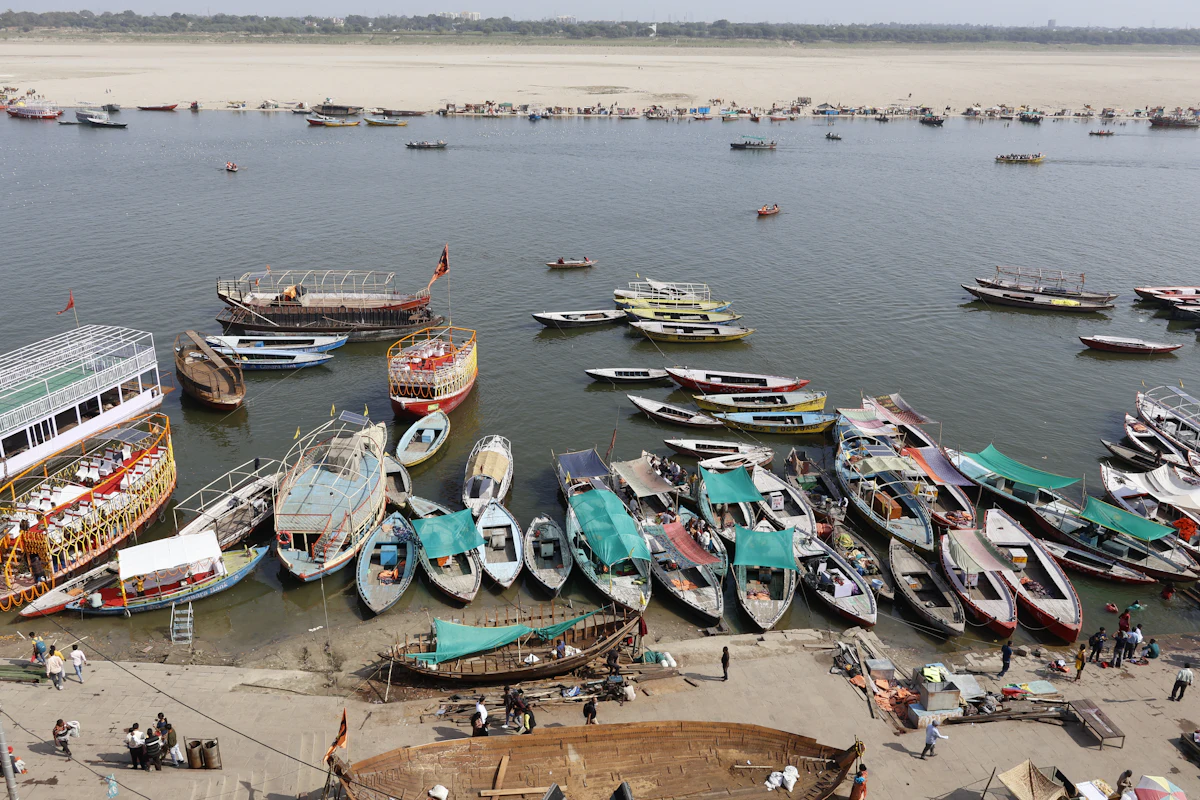
Take a boat ride at sunrise. Rowing boats leave from most of the main ghats and the river is calm and golden at that hour. Agree the price, the route and the duration before you step in; a shared rowing boat is cheaper than a private one. As you pass Manikarnika Ghat, the main cremation ghat, do not photograph the cremations - it is deeply disrespectful, and you may be asked to stop.
After breakfast, visit Kashi Vishwanath, one of the twelve jyotirlingas. The Kashi Vishwanath Corridor now connects the temple directly to the riverfront and has made access much easier than it used to be. Phones, bags, leather items and electronics are generally not allowed inside, so use the official lockers. Queues are long in the mornings, on Mondays and during festivals - go mid-afternoon on a weekday if you can. Spend the rest of the day in the old city lanes: kachori-sabzi for breakfast, lassi in a clay cup, and the silk weavers if you are interested in Banarasi saris.
Day 3: Sarnath
Sarnath is about 10 km from the city and is where the Buddha gave his first sermon after enlightenment. A half-day is enough: the Dhamek Stupa, the ruins of the old monastic complex, the temples built by Buddhist communities from several countries, and the archaeological museum, which holds the Lion Capital of Ashoka that became India's national emblem. Check the museum's opening days before you go. A shared auto or a cab split between the group is the cheapest way there and back. Spend your last evening on the ghats.

When to go
- October to March is the most comfortable season. December and January mornings are foggy and cold, which can delay trains badly - leave slack in your plans.
- April to June is very hot; do your walking at dawn and dusk.
- July to September is the monsoon. The Ganga rises, often over the lower ghats, and boat rides and the riverside walk can be restricted.
- Dev Deepawali, on the Kartik Purnima full moon a couple of weeks after Diwali, is spectacular and extremely crowded. Prices for rooms and boats rise steeply.
Budget: low, mid and high
All figures are per person for a 3-day trip from Delhi with overnight trains both ways, sharing rooms and local transport in a group of three or four.
Low budget
- Getting there and back (sleeper class, or 3AC if booked early): ₹1,000-3,000
- Stay (2-3 nights in a hostel dorm or simple guesthouse room, shared): ₹1,200-3,000
- Food (street food, thalis, lassi): ₹1,000-1,800
- Local transport, shared sunrise boat and Sarnath tickets: ₹700-1,500
- Buffer for train delays: ₹500-1,000
Total: roughly ₹4,500-10,000 per person.
Mid budget
- Getting there and back (3AC or 2AC, or a fast day train): ₹3,000-6,000
- Stay (2-3 nights in a comfortable ghat-side or old-city hotel, shared): ₹3,000-6,000
- Food (cafes, restaurants with river views): ₹2,000-3,000
- Local transport, private boat for the group, guide and Sarnath by cab: ₹1,500-3,000
- Buffer: ₹1,000-1,500
Total: roughly ₹10,500-19,500 per person.
High budget
- Getting there and back (flights, or 1AC on the train): ₹7,000-14,000
- Stay (2-3 nights in a heritage hotel on the ghats, shared): ₹8,000-18,000
- Food: ₹3,000-5,000
- Local transport, private boats, guided walks and a cab for the trip: ₹3,000-6,000
- Buffer: ₹1,500-3,000
Total: roughly ₹22,500-46,000 per person.
Small things that save money and hassle
- Stay close to the ghats between Assi and Dashashwamedh. You will walk everywhere that matters and spend almost nothing on autos.
- Fix boat prices before boarding, and fix them per boat, not per person.
- Politely decline anyone offering a "special" darshan, puja or shortcut for a fee outside the official system.
- Carry small notes. Change is hard to find in the lanes.
If you want to see more of the state, the Uttar Pradesh heritage road trip guide covers Agra, Lucknow and the rest of the circuit.
Going with a group
Varanasi is a city you can do alone, but a group makes it cheaper and calmer. A private boat, a cab to Sarnath and a family room all cost about the same for one person or four, and the crowds at the aarti are easier with friends to keep an eye on each other's bags. If you are looking for company, find a group heading there, or post your own dates and let others join. Travelling with people you have never met? Your first group trip with strangers has practical advice on making it go well.
Now find people going the same way
Browsing trips, clubs and members is free and open to everyone - no account or membership needed to look around.