
Rishikesh Weekend Trip Budget From Delhi: 2-Day Plan for Low, Mid and High Budgets
A two-day Rishikesh weekend from Delhi, costed three ways - bus or train to Haridwar, the Laxman Jhula and Ram Jhula side, Triveni Ghat aarti, rafting season, camping and what a trip really costs per person.
Rishikesh is the easiest proper weekend out of Delhi. It is close enough to leave after work on Friday, cheap enough that a student budget works, and it has a ready-made plan for two days: the river, the bridges, an evening aarti and, for most of the year, a morning on a raft. Below is how to get there, what to do, and what it costs per person at three comfort levels.
One thing to know before you plan the evenings: Rishikesh is a pilgrim town, and within its limits it is vegetarian and alcohol-free.
Getting there from Delhi
Rishikesh is roughly 240 km from Delhi, and the drive usually takes five to seven hours depending on how you leave the city and how bad the traffic is through Meerut and Roorkee. There are three sensible ways to do it.
- Bus. Ordinary, semi-deluxe and Volvo-type buses run from Delhi through the day and night, either to Haridwar or straight to Rishikesh. An overnight bus on Friday saves a night of room rent and is the cheapest option by a distance.
- Train to Haridwar. Haridwar is on the main line and has frequent trains from Delhi, including day trains with chair cars. From Haridwar it is about 25 km to Rishikesh by shared auto, bus or taxi - allow an hour. Some trains also run to Yoga Nagari Rishikesh station, but there are fewer of them, so check the timetable for your dates.
- Self-drive or a hired cab. The most flexible option and, split four ways, not the most expensive one. Leave before dawn, and since parking near the bridges is tight on weekends, stay somewhere with its own parking.

Where to base yourself
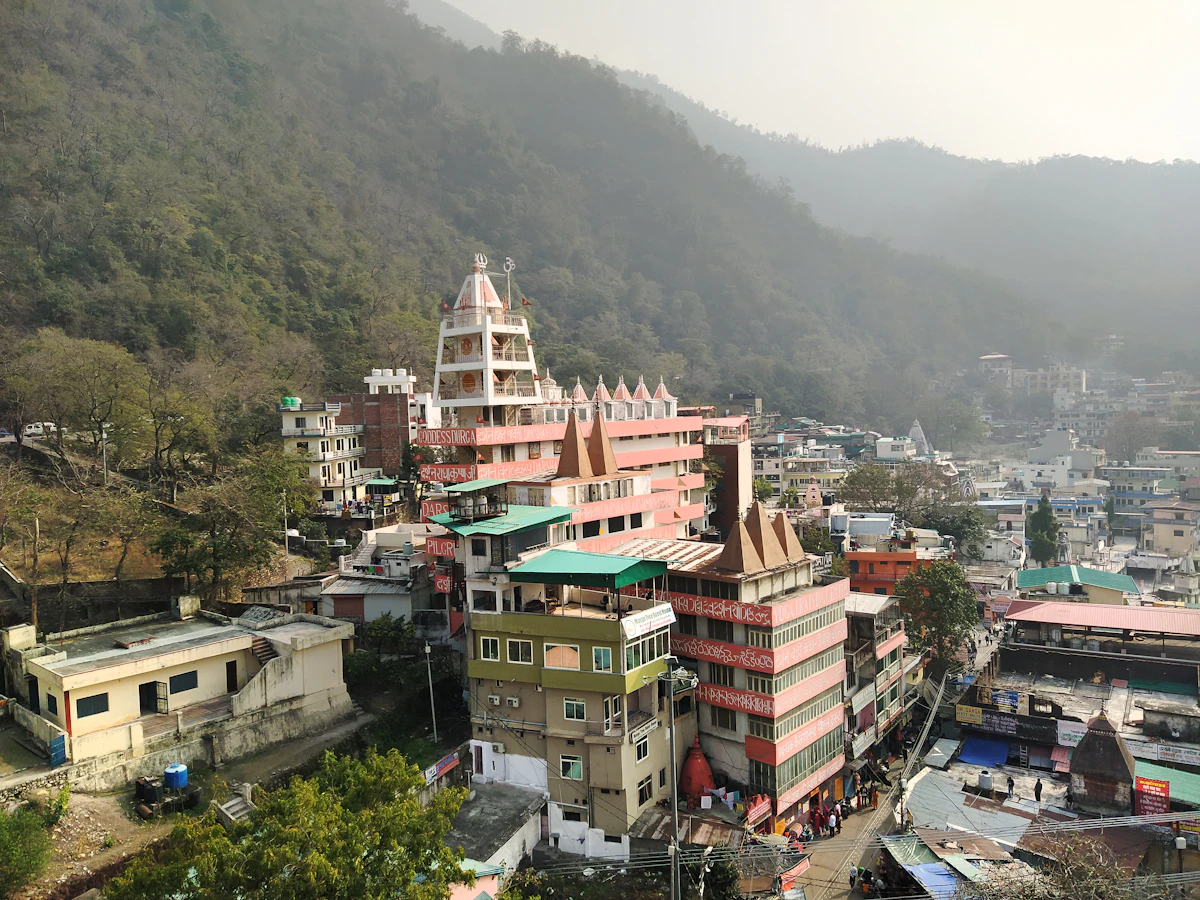
Most first-time visitors stay on or near the Laxman Jhula and Ram Jhula stretch, a few kilometres upstream of the main town. This is where the suspension bridges, the ashrams, the cafes and most of the backpacker stays are, and you can walk almost everything. The Tapovan side above Laxman Jhula is where the cafe culture is densest, with hostels and guesthouses at every price.
The old Laxman Jhula bridge has been closed to foot traffic in recent years over safety concerns, with a new crossing built alongside it. Ram Jhula, further downstream, is the other main crossing. Check what is open when you arrive rather than relying on an old map.
If you are mainly there to raft and camp, stay upstream around Shivpuri instead, where the camps are.
A two-day plan
Day one: the bridges, the ghats and the aarti
- Arrive in the morning, drop your bags and walk the Laxman Jhula and Ram Jhula area - the ghats, the temples on both banks and the lanes between them.
- In the afternoon, walk up to the Neer waterfall (often called Neer Garh), a short drive or a long walk above the Laxman Jhula side. It is a series of small falls and pools with an easy path, best after the monsoon when there is water in it. There is a small entry fee - check the current fee at the gate.
- In the evening, go to the Ganga aarti. Triveni Ghat in the main town has one of the best known, with lamps, chanting and a large crowd; there are also well-attended aartis at the ashram ghats near Ram Jhula. Get there early if you want to sit near the water.
Day two: the river
The usual plan is a morning rafting run, lunch, and a bus or drive back to Delhi in the afternoon. Rafting in Rishikesh runs on the Ganga upstream of town, in stretches of different lengths - the short runs are fine for complete beginners, the longer ones from further upstream have more and bigger rapids. A licensed operator should give you a safety briefing, a helmet and a life jacket - do not get on a raft without them.
The rafting season runs roughly from September or October to June. It is closed in the monsoon, when the river is high, fast and full of debris, and the exact opening and closing dates are set each year by the authorities - check before you book a trip around it.
Camping, cafes and the evenings
The camps upstream around Shivpuri are the classic Rishikesh weekend: a tent, a bonfire, a set dinner, and a rafting run in the morning. Most are set back from the riverbank on terraces now rather than on the sand. Quality varies a great deal, so read recent reviews and ask exactly what is included - meals, rafting, transfers - before you pay.
The Tapovan and Laxman Jhula cafes are where the backpacker crowd ends up in the evening. Prices are higher than a dhaba in town, but one cafe meal a day still fits a budget trip.
When to go
- October to March - pleasant days, cold nights in December and January. Rafting is open for most of it.
- April to June - hot in the afternoon, but the river is at its best for rafting and the water is welcome.
- July to September - monsoon. Rafting is closed, the highway can be slow and landslides affect the roads above Rishikesh. The town itself is green and quiet, but do not plan anything that depends on the river.
- Avoid long weekends and major festival dates if you can - both crowd the town and push room rates up sharply.
Budget: low, mid and high
These figures are per person for two days and one night, starting and ending in Delhi, with rooms and transport shared in a group of three or four.
Low budget
- Getting there and back: ₹800-1,500 - ordinary or semi-deluxe bus, or a train to Haridwar plus a shared auto.
- Stay: ₹500-1,000 - a hostel dorm bed or a shared basic guesthouse room.
- Food: ₹600-1,000 - dhabas, the town's thali places and one cafe meal.
- Local transport and activities: ₹800-1,500 - shared autos, a short rafting run and small entry fees.
- Buffer: ₹300-500.
Total: roughly ₹3,000-5,500 per person.
Mid budget
- Getting there and back: ₹1,200-2,500 - a Volvo-type bus or a train chair car.
- Stay: ₹1,100-2,000 - a private room in a guesthouse, or a mid-range camp package split between the group.
- Food: ₹1,000-1,800 - cafes for most meals.
- Local transport and activities: ₹1,200-2,500 - a longer rafting stretch, autos or a taxi for the waterfall and transfers.
- Buffer: ₹500-1,000.
Total: roughly ₹5,000-9,800 per person.
High budget
- Getting there and back: ₹2,500-4,500 - a hired cab, or your own car with fuel, tolls and parking split four ways.
- Stay: ₹3,000-6,000 - a resort, a boutique stay or a better camp.
- Food: ₹2,000-3,500 - sit-down restaurants and cafes throughout.
- Local transport and activities: ₹2,000-4,000 - the longest rafting run, the car for every local trip, and any yoga or wellness session you add.
- Buffer: ₹1,000-2,000.
Total: roughly ₹10,500-20,000 per person.
The biggest saving in that table is not a cheaper room. It is the group size: a cab, a room and a camp tent all cost much the same for two people as for four. For keeping track of who paid what over a weekend, see how to split trip costs fairly.
Going with a group
Rishikesh is one of the most common weekend trips posted on SastiTripsWale, and it is a good first trip with people you have not met - short, cheap, and easy to leave early if it is not working. You can find a group heading there and share the cab and the rooms, or post your own trip with the dates you have and let others join you. Agree up front how the shared costs will be split, keep the plan simple, and the weekend usually takes care of itself.
Now find people going the same way
Browsing trips, clubs and members is free and open to everyone - no account or membership needed to look around.