
Jibhi and Tirthan Valley on a Budget: Jalori Pass, Serolsar Lake and a 3-Day Plan From Delhi
A budget guide to Jibhi and Tirthan Valley - reaching via the Aut tunnel, Jalori Pass and the Serolsar lake walk, Chehni Kothi, the Great Himalayan National Park gateway, best months and per-person costs.
Jibhi and the Tirthan valley are what people mean when they say they want "a quiet Himachal trip". Both sit in the Banjar area of Kullu district, a short detour off the Manali highway, and both have the things the busier towns have lost: wooden village houses, apple orchards, a clear river and forest walks where you can go an hour without meeting a tour group. They are also cheap, as long as you plan around a few logistics.
This guide covers how to get there through the Aut tunnel, a three-day plan built around Jalori Pass and Serolsar lake, the Tirthan side and the Great Himalayan National Park, and what it all costs per person.
Getting there: the turn after the Aut tunnel
Jibhi and Tirthan are both reached by leaving the Chandigarh-Manali highway at Aut, just after the long Aut tunnel and before Kullu. From there a smaller road climbs past Larji and Banjar into the valley. Gushaini and the lower Tirthan valley branch off near Banjar; Jibhi is a little further up the road towards Jalori Pass.
- From Delhi: roughly 480-520 km and 11-13 hours to Jibhi. The usual move is an overnight Manali-bound bus, getting off at Aut early in the morning.
- From Chandigarh: about 230-270 km, 7-9 hours.
- Aut to Jibhi or Gushaini: local buses run towards Banjar, and from Banjar on to Jibhi; a taxi from Aut takes about 1-1.5 hours and many homestays can arrange a pickup.
- Self-drive: comfortable up to Banjar; after that the roads are narrow and steep, particularly towards Jalori. Small cars manage fine in dry weather.
The last stretch is the slow part, not the highway. Plan to arrive by early afternoon so you are not looking for a homestay down a village path after dark. If you are driving, the road trip safety checklist is worth a read before you leave.
A 3-day Jibhi and Tirthan plan
Day 1: arrive in Jibhi, the waterfall and the village
Overnight bus, early arrival, a few hours of sleep. Jibhi itself is small: a cluster of homestays and cafes along a stream, with a short walk to a waterfall nearby. Spend the afternoon walking around the village and the orchards - this is a place to slow down, not to tick boxes.
Day 2: Jalori Pass and Serolsar lake
Jalori Pass sits at roughly 3,100-3,200 m, around 12 km above Jibhi by road, and is the highlight of the trip. From the top there are two easy walks. The one most people do runs about 5 km one way through oak and deodar forest to Serolsar, a small lake with a temple beside it - mostly gentle, with a few short climbs, and about 4-5 hours there and back at an easy pace. The other goes the opposite way to the ruins of Raghupur Fort, with wide meadows and long views.

- Go up early; cloud tends to build later in the day.
- Take shared transport or a taxi to the top and walk from there. Walking up from Jibhi is possible but adds a long, steep road climb.
- Carry water, snacks and a warm layer - it is noticeably colder at the pass than in the village.
Day 3: Chehni Kothi and the Tirthan side
Chehni Kothi is a tall stone-and-timber tower temple above a village near Jibhi, built in the traditional kath-kuni style of the region. It is a short but steep walk up from the road, and the view down the valley from the top is worth the effort. Visit respectfully - it is a living temple, and parts may be closed to visitors.
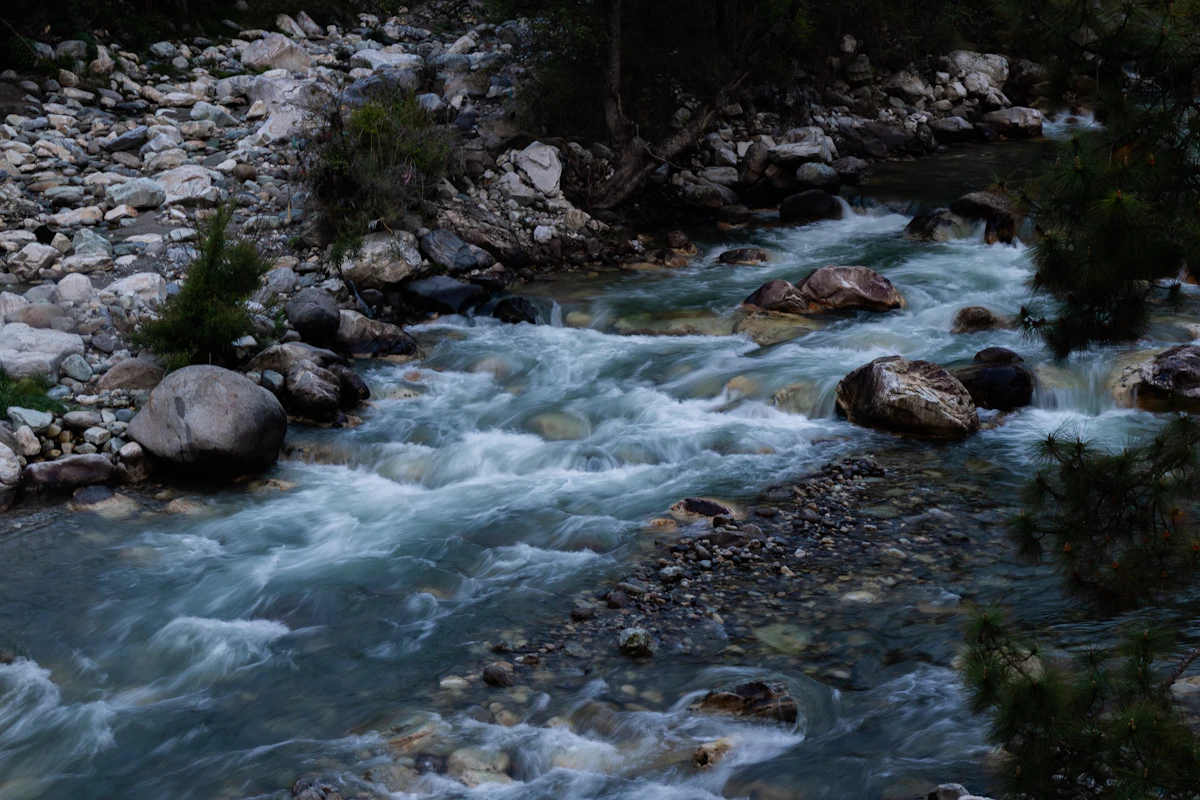
After lunch, head down to Gushaini on the Tirthan river for the afternoon. The river, clear and fast, is the main attraction - sit by it, walk the village paths, and if you have another day, stay the night here rather than rushing back. Evening buses to Delhi and Chandigarh pass through Aut.
Tirthan Valley and the Great Himalayan National Park
Tirthan valley is one of the gateways to the Great Himalayan National Park, a UNESCO World Heritage Site. The park itself is for multi-day treks, and entering requires a permit from the park authorities - check the current fee and rules before you go, and go with a registered local guide. For a budget trip, the lower valley around Gushaini and the short walks along the river give you a taste without the cost of a full trek.
Fishing for trout in the Tirthan also needs a licence. If you see people fishing, assume they have one, and do not try it without.
When to go
- March to June - pleasant, green, and the main season. Weekends fill up.
- July to mid-September - monsoon. Landslides on the Banjar road and around Aut are common and the highway has been badly damaged in recent years. Not a good time for a short trip.
- Late September to November - clear days, autumn colour and quiet. The best window.
- December to February - snow at Jalori and sometimes in Jibhi. The road over Jalori Pass is usually closed after heavy snow; plan the trip around the village, not the pass.
Budget: low, mid and high
Per person, for a 3-day, 2-night trip from Delhi with overnight buses both ways, sharing rooms and local transport in a group of three or four. From Chandigarh, reduce the travel line by roughly a third.
Low budget
- Getting there and back: HRTC ordinary or semi-deluxe bus to Aut plus local buses, ₹1,400-2,400 return
- Stay: shared room in a basic homestay or hostel, 2 nights, ₹1,000-2,000
- Food: homestay meals and dhabas, ₹1,000-1,800
- Local transport: local buses and one shared ride to Jalori, ₹400-900
- Buffer: ₹500-1,000
Total: roughly ₹4,300-8,100 per person.
Mid budget
- Getting there and back: Volvo or AC sleeper plus taxi from Aut, ₹2,600-4,000 return
- Stay: private room in a good homestay or cottage shared by 2-3, ₹2,500-4,500
- Food: homestay meals and cafes, ₹1,600-2,800
- Local transport: taxi to Jalori, Chehni and Gushaini split in the group, ₹1,000-2,000
- Buffer: ₹1,000-1,500
Total: roughly ₹8,700-14,800 per person.
High budget
- Getting there and back: private cab or self-drive split four ways, ₹4,500-8,000
- Stay: boutique cottages or treehouse-style stays, ₹5,000-10,000
- Food: restaurant and cafe meals throughout, ₹2,500-4,500
- Local transport, activities and permits: private cab for all days, local guide, GHNP entry if you go, ₹2,500-5,000
- Buffer: ₹1,500-3,000
Total: roughly ₹16,000-30,500 per person.
Practical notes
- Mobile networks are patchy in parts of the valley. Download an offline map and save your homestay number.
- ATMs are in Banjar, not in every village. Carry cash.
- Many homestays include meals; ask when you book. It is usually the cheapest and best food you will get.
- Pack for cold evenings even in summer, especially if you are going up to Jalori.
Going with a group
Jibhi works best with three or four people: one taxi to Jalori, one room in a homestay, one big dinner. If your friends cannot make it, find a group heading there on SastiTripsWale, or post your own trip and let people join you.
Now find people going the same way
Browsing trips, clubs and members is free and open to everyone - no account or membership needed to look around.