
The Himachal Road Trip Guide: Routes, Seasons and Realistic Distances
Which Himachal route to pick for the days you actually have - the Shimla ridge, the Manali-Atal Tunnel run, Kinnaur and the Spiti circuit - with honest driving times, altitude warnings and season notes.
Himachal Pradesh is the default answer to "where should we ride this weekend" for anyone within a day’s drive of Chandigarh, and that is exactly why so many Himachal trips go badly. People plan a Spiti circuit around a three-day weekend, or ride to Rohtang in March, or budget eight hours for a road that takes fourteen. The mountains do not negotiate.
This guide is about matching the route to the days you actually have. Everything below assumes you are starting from Chandigarh, which is the practical gateway for almost all of it - add roughly five hours if you are starting from Delhi.
The four corridors
Almost every Himachal trip runs along one of four corridors. Knowing which one you are on tells you most of what you need to know about difficulty, altitude and season.
1. The Shimla ridge (NH-5, lower)
Chandigarh - Kalka - Solan - Shimla, and the towns hanging off it: Kasauli, Barog, Chail, Kufri, Narkanda. Maximum altitude around 2,200-2,500 m. Open all year, though snow closes the higher sections in deep winter. This is the beginner corridor and the weekend corridor, and there is no shame in it.
2. The Kullu-Manali corridor (NH-3)
Chandigarh - Bilaspur - Mandi - Kullu - Manali, roughly 300 km and eight to ten hours with stops. Manali sits at about 2,000 m. Beyond it, the Atal Tunnel - 9.02 km, opened in 2020 - drops you into Lahaul at Sissu without going over the Rohtang Pass at all. That tunnel changed this corridor completely: Lahaul went from a seasonal destination to a year-round one, weather permitting.
3. Kinnaur (NH-5, upper)
Continue past Shimla and Narkanda along the Sutlej through Rampur, Jeori, Reckong Peo, Kalpa and on to Nako. The scenery shifts from pine forest to high desert over a day of driving. Sections of this road are cut into sheer rock faces above the river and are genuinely exposed. This is the most underrated route in the state.
4. Spiti
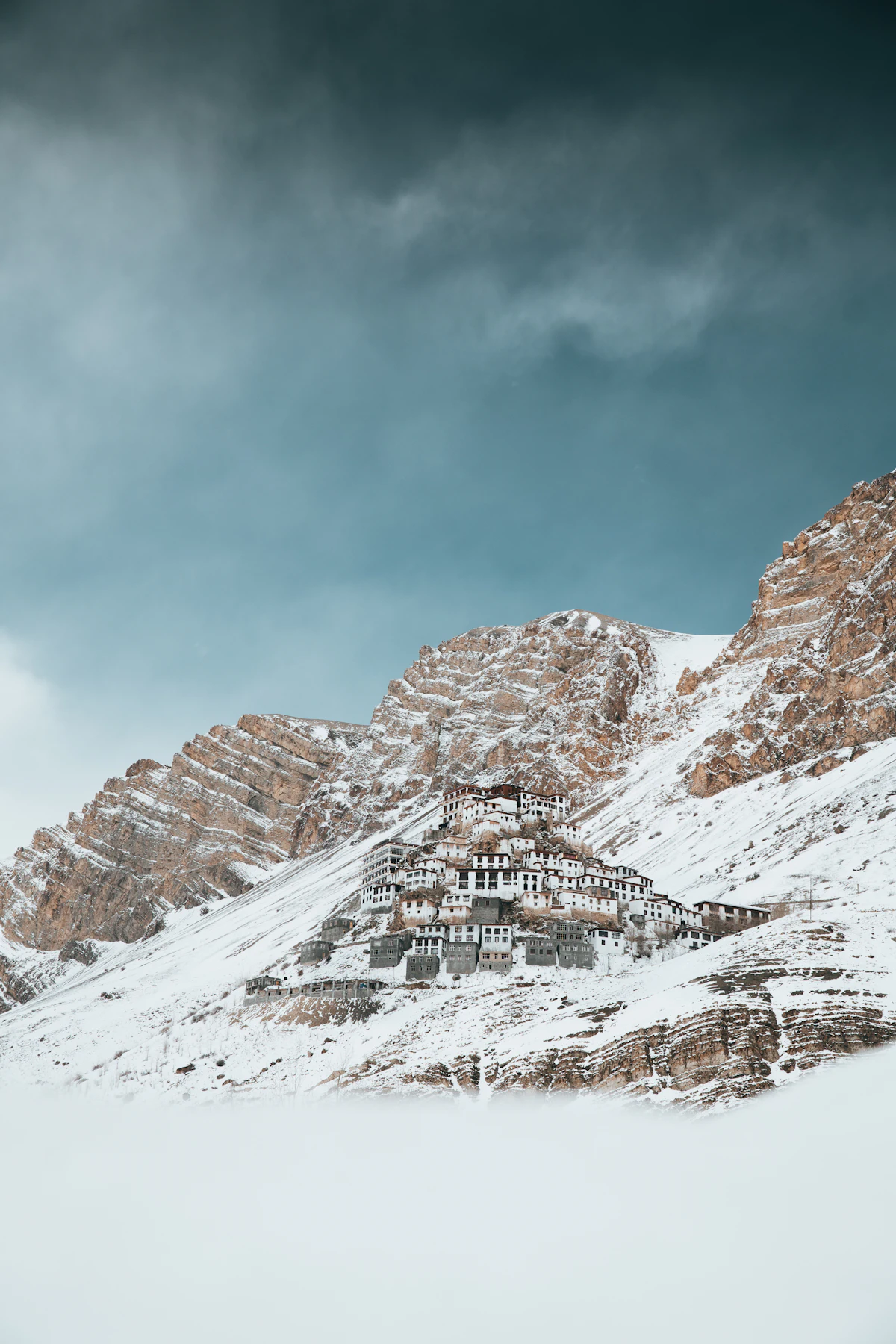
The serious one. Spiti is a cold desert valley above 3,000 m, reached either from Kinnaur in the south or over Kunzum La from Lahaul in the north. Kaza, the main town, is at about 3,800 m; Komic and Langza are higher still. Doing both halves in sequence is the full Spiti circuit.

Matching route to days
- 2 days: Kasauli, Morni, Chail or Solan. A single overnight. Anything more is a drive, not a trip.
- 3 days: Shimla with Mashobra and Chail, or Manali if you accept that two of the three days are spent driving.
- 4-5 days: Manali plus Lahaul through the Atal Tunnel - Sissu, Keylong, maybe Jispa. Or Kinnaur as far as Kalpa.
- 7 days: Kinnaur to Kaza and back the same way, at a sane pace with an acclimatisation day.
- 10-12 days: the full Spiti circuit - up through Kinnaur, over Kunzum La, down through Lahaul and Manali. This is the trip people mean when they say "Spiti", and it does not compress.
Altitude is the thing nobody plans for
Acute mountain sickness starts to matter above roughly 2,500 m and is a serious consideration anywhere in Spiti or on the high passes. It does not correlate with fitness or age - strong young riders get it as often as anyone, partly because they push harder.
- Gain altitude gradually. Do not go from Manali to Kaza over Kunzum in one push if you can avoid it.
- Build in an acclimatisation day at around 3,000 m before going higher. Kalpa or Keylong are the usual choices.
- Headache, nausea, breathlessness at rest, confusion: these mean go down. Not tomorrow - now.
- Drink far more water than feels necessary. Skip the alcohol for the first two nights at altitude.
Descending is the only reliable treatment. Every year somebody tries to sleep off altitude sickness at 4,000 m and it goes badly. There is no prize for continuing.

Seasons, corridor by corridor
- Shimla ridge - year-round. Best October-November and March-June. Snow can close Kufri and Narkanda in January and February.
- Manali and Lahaul - Manali is year-round. The Atal Tunnel keeps Lahaul accessible far longer than Rohtang ever did, but heavy snow still closes it; check before committing.
- Kinnaur - roughly April to November. Avoid the peak monsoon: this corridor has the most active landslide zones in the state.
- Spiti via Kinnaur - generally May to October. Spiti via Kunzum La from Manali - typically only about June to early October, since the pass is snowbound the rest of the year.
- Monsoon, statewide - July to mid-September. Landslides, road closures and river crossings that were not there the previous day. Some people love it. Nobody should plan a tight schedule in it.
Permits and paperwork
For Indian nationals, most of Himachal needs no permit. The two things that come up: Rohtang Pass itself has historically been subject to a daily vehicle cap and an online permit system, and the inner-line area of upper Kinnaur near the border requires a permit for foreign nationals. Both of these change, so check the current position with the district administration before you rely on it.
Carry the actual documents, not photographs of them: driving licence, registration certificate, valid insurance, and PUC. Checkposts in Kinnaur and Lahaul do ask.
Vehicle notes
- Motorcycles - anything healthy will do the Shimla and Manali corridors. For Spiti, ground clearance and tyre condition matter more than displacement. Carry a puncture kit and know how to use it.
- Cars - a standard hatchback handles everything up to Kalpa and Sissu comfortably. For Spiti proper, higher clearance is strongly preferable; the water crossings between Losar and Batal have swallowed a lot of low bumpers.
- Fuel - the gap between Kaza and Reckong Peo is the one that catches people. Fill whenever you are below half in Spiti, not when you are low.
- Brakes - descending is what kills brakes in the hills. Engine-brake in a low gear; do not ride the pedal for twenty kilometres.
Money and groups
The fixed costs of a Himachal trip - fuel, tolls, the vehicle itself - do not care how many people are in it. The variable costs, mainly rooms and food, roughly track headcount. The result is that per-head cost falls steeply from one traveller to four and then flattens out.
This is why the Himachal circuit is so consistently done in groups, and why it is worth finding people to go with rather than absorbing a whole fuel bill alone. Have a look at upcoming trips for runs that already have seats going spare, or the travel clubs that do these routes on a regular calendar. Before you leave, work out the money rules using how to split trip costs fairly - it is a much easier conversation in a car park than at 3,800 m.
For the lower end of the state in detail, see the guides to Kasauli, Shimla and Solan. Pack from the Himalayan packing list, and read the road trip safety checklist before the first long day.
Now find people going the same way
Browsing trips, clubs and members is free and open to everyone - no account or membership needed to look around.